
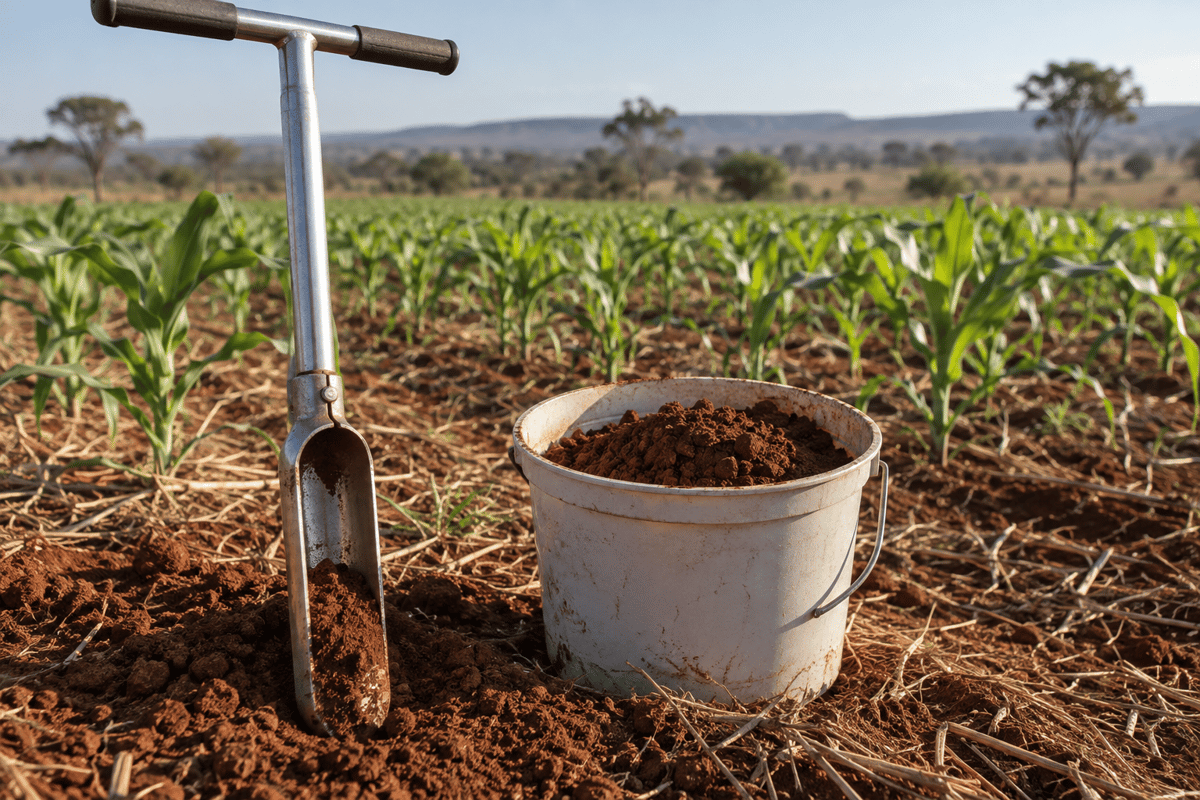
Good soil sampling helps you plan fertilizer use with confidence. Learn how to organize samples and put your soil report to work for the next crop.
Before choosing fertilizer for the next crop, it helps to ask a simple question: what does the soil actually need? Soil testing helps assess fertility and guide management decisions. But the process starts in the field, with samples that accurately represent each part of the farm.
A poorly collected sample can lead to the wrong decisions, even when the laboratory does everything correctly. Planning the sampling deserves just as much care as choosing and buying farm inputs.
Not every field belongs in the same bucket
Fields with different cropping histories, slopes, soil textures or management practices may have very different needs. Combining them into one sample can hide those differences. Start by identifying relatively uniform areas and planning how to sample each one.
Embrapa explains why separating these areas matters when you want results that reflect the soil being assessed. The boundaries should follow conditions on the farm, not simply the size of the field.
Careful sampling makes the results more useful
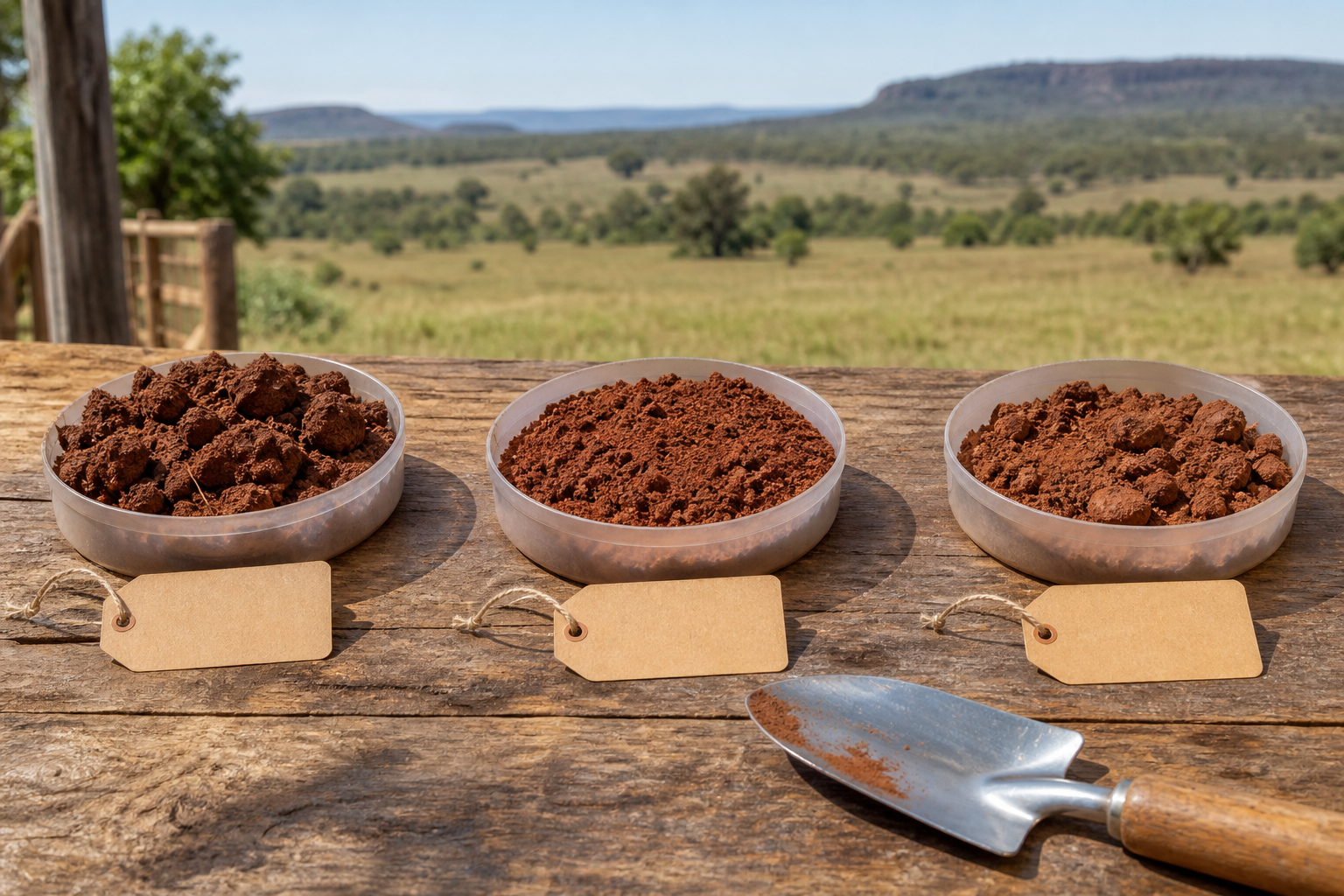
Sampling depth, the number of sampling points and the timing should suit the cropping system and follow agronomic guidance. Clean tools, suitable containers and clear labels help prevent contamination and mix-ups.
Before sending samples to the laboratory, check that:
Each sample is clearly matched to the right field.
The sampling depth and date have been recorded.
The laboratory has all the information it requested.
You have notes on the previous crop and fertilizer applications.
Embrapa's guide to soil and plant sampling for chemical analysis covers sampling practices and explains why field history adds useful context to a laboratory report.
Turning a soil report into a crop plan
A test result should not automatically become a fertilizer order. It needs to be interpreted alongside the crop, the production system, the field's history and the technical recommendations used in the region. One fertilizer blend will not necessarily suit every field.
For growers in Uberlândia and the surrounding area, a practical approach is to keep reports and records organized by field and bring them to the discussion with an agronomist. That way, fertilizer planning starts with information from your own farm.
Planning inputs for the next crop? Talk to the Mega Agronegócios team, with your soil report and the agronomic recommendation for your field at hand.
This article provides general information. Application rates and management practices should be determined with an agronomist for each farm.